Eolus’s Baltic Sea Commitment deepened understanding of offshore wind power’s impacts on underwater marine ecosystems
Through its Baltic Sea Commitment, which concluded in 2025, Eolus has advanced knowledge of how offshore wind power affects underwater marine ecosystems. By organising workshops, engaging in research collaboration and communicating openly, the company generated new insights and explored ways to reduce the environmental impacts of offshore wind power in the Baltic Sea.
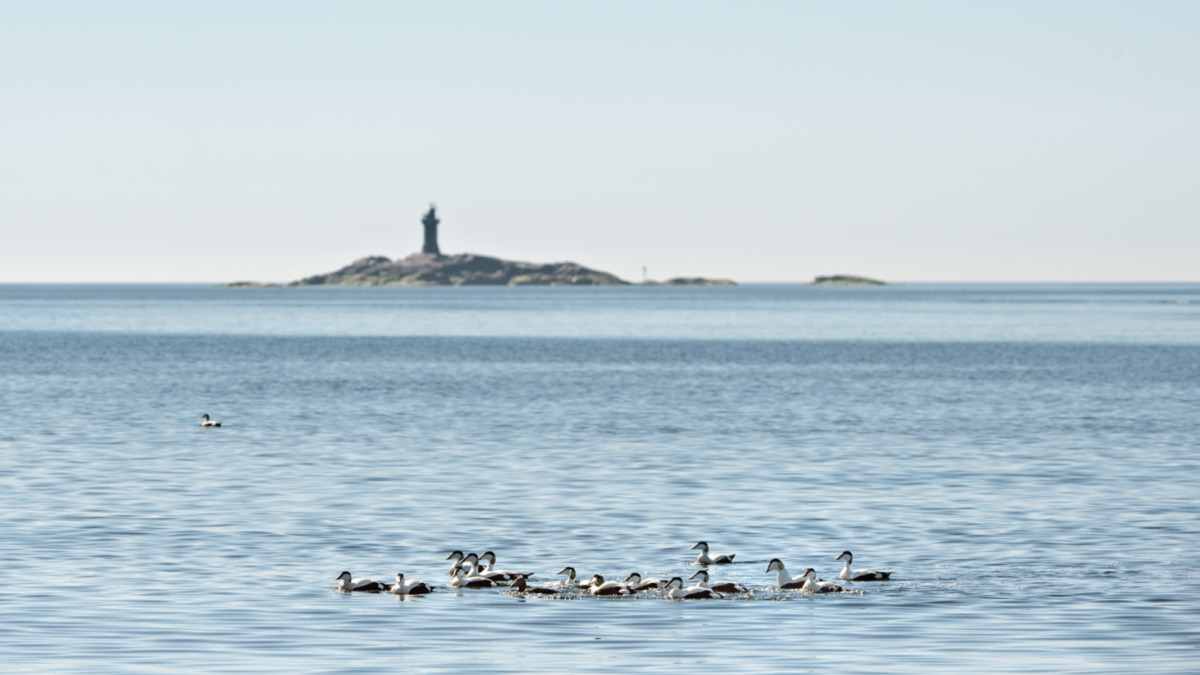
Eolus is a Nordic renewable energy project developer active in offshore wind projects in the exclusive economic zones of Finland and Sweden. As part of a three-year Baltic Sea Commitment (2023–2025) made to BSAG, Eolus pledged to identify and minimise the impacts of offshore wind power development, construction and operation on underwater marine nature. The company also committed to increasing knowledge and public awareness of offshore wind power’s environmental impacts in the Baltic Sea.
During the commitment period, Eolus implemented a range of measures to meet these objectives. Key activities included organising expert workshops on the environmental impacts of offshore wind power and underwater ecosystems. In addition, Eolus supported two academic theses focusing on ecological compensation and on the impacts and mitigation of underwater noise.
Offshore wind power’s impacts on marine nature explored in expert workshops
Eolus organised three expert workshops during the commitment period to examine the effects of offshore wind power on marine ecosystems. A marine nature expert from BSAG also participated. The discussions covered underwater noise, the impacts of turbine structures on fish, marine mammals and birds, and seabed disturbance caused by offshore wind construction.
The workshops highlighted that the environmental impacts of offshore wind power depend on location, the species affected and the construction methods used. The cumulative effects of multiple projects can extend over wide areas. At the same time, impacts can be mitigated through careful planning, appropriate timing, technical solutions and long-term environmental monitoring.
Ecological compensation presents both challenges and opportunities
One of the theses funded by Eolus examined the potential of ecological compensation as a means of mitigating the environmental impacts of offshore wind power in the Baltic Sea. The findings suggest that compensation measures are more feasible in coastal areas and on land, while implementation in offshore marine areas remains challenging.
In the Baltic Sea, ecological compensation is further complicated by the requirement that environmental harm should be offset by improving the condition of the same, or at least a comparable, habitat type. This can be difficult in practice, as the Baltic Sea’s diverse ecosystems make it challenging to identify suitable equivalent areas, particularly offshore.
Despite these challenges, ecological compensation holds considerable potential. When implemented transparently and in close collaboration with experts, it can improve the social acceptability of projects. Broader application will require further research into the Baltic Sea’s underwater ecosystems and the impacts of offshore wind power, as well as innovative solutions to address existing limitations.
Construction-phase noise poses the greatest risk to marine life
The second thesis focused on underwater noise generated during offshore wind power construction, how noise levels vary across different construction phases, and the effectiveness of various mitigation measures.
The most significant noise impacts occur during the construction phase, particularly during blasting and pile driving of turbine foundations. High noise levels and sudden pressure changes can harm marine organisms if not properly mitigated. In addition, vessel traffic associated with construction and operation generates continuous noise that can disrupt the communication and behaviour of fish and marine mammals.
Noise levels are strongly influenced by the foundation type. For example, floating turbines and lighter foundation solutions can reduce both seabed disturbance and underwater noise.
The reason Eolus has not renewed its engagement in BSAG is that the development of Eolus’s offshore projects in Finland currently is on hold due to incomplete regulation for offshore wind in the EEZ and a challenging market outlook.
CONTACT US