Green Flag Raised on Topelius Day
On Topelius Day, 14 January 2026, BSAG will raise a new flag reflecting the current state of the Baltic Sea. Instead of Finland’s traditional blue and white, the Baltic Sea flag features a green cross on a grey background. Through the Baltic Sea Green Cross Flag campaign, BSAG aims to draw attention to the sea’s critical condition and to the urgent need to protect it.
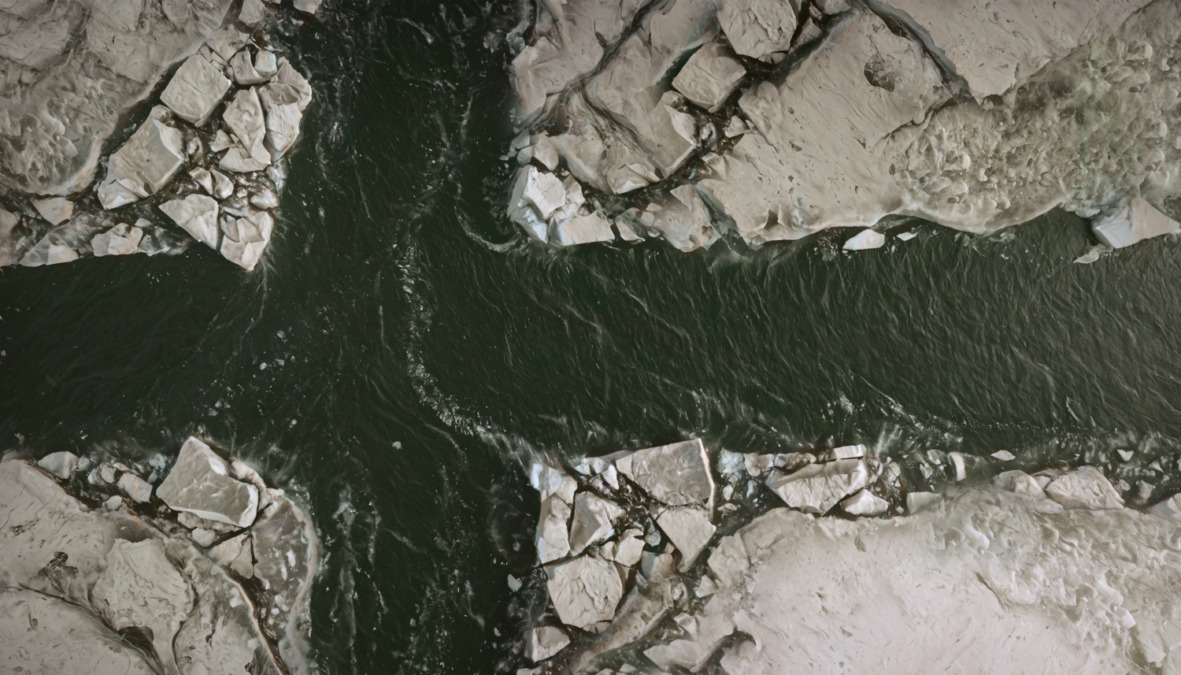
Once blue and white—now green and murky. On this new flag, the familiar blue cross has been replaced by green on a grey field. The colours symbolise the Baltic Sea’s eutrophication and the disappearance of winter ice cover. They are drawn from Sentinel-2 satellite images of the Baltic Sea.
With this campaign, BSAG hopes to spark discussion about the Baltic Sea’s alarming condition and to remind people that protecting the sea is also about human well-being and our shared future.
The Baltic Sea is one of the most polluted seas in the world. We face two choices: we can accept its continued decline, or we can take action to restore its health and vitality. BSAG works to improve the well-being of the Baltic Sea and calls on decision-makers, businesses, and citizens to choose action.
Finland must use both colours of the northern seas, white and blue—the colours of icebound waters and open sea—in its flag.
Zacharias Topelius, writer
White Sea Ice and Blue Sea
14 January marks the birthday of Zacharias (Zachris) Topelius.
Topelius played an important role in the debate over the colours of the Finnish flag in the 1850s and 1860s. Under his leadership, the Fennoman movement promoted blue and white as Finland’s national colours.
On 9 June 1863, Helsingfors Tidningen published an article by Topelius under the pseudonym Undecumque:
“White is the colour of our country during the six freezing months when our ports are closed—
as has been said, the Finnish flag is a necessity of nature. —
As a daughter of the sea, from which it has risen and continues to rise, Finland must use both colours of the northern seas, white and blue—the colours of icebound waters and open sea—in its flag.”
(excerpt)
BSAG’s green flag is meant as a visual warning: the condition of the Baltic Sea has changed. Eutrophication and rising sea temperatures affect not only nature, but also people’s lives and the future of the region.
Climate Change Is Accelerating Eutrophication
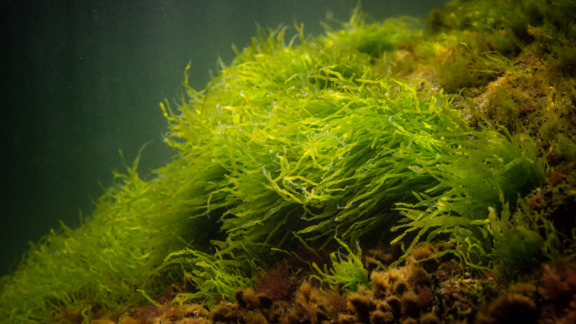
The Baltic Sea is heavily affected by nutrient runoff from land. Phosphorus and nitrogen in particular fuel blooms of cyanobacteria (blue-green algae) and filamentous algae, which grow rapidly and outcompete slower-growing species that depend on light.
As algae decompose, the process consumes oxygen on the seabed. The result is a dead, oxygen-depleted area—roughly the size of Ireland—where benthic animals, fish, and other marine life cannot survive. Oxygen-depleted sea beds also release phosphorus that was previously bound in sediments, further accelerating the vicious cycle of eutrophication.
“Climate change is making the effects of eutrophication even worse. Grey, rainy winters shorten the ice season and increase nutrient runoff from land into the sea. This adds to the nutrient load and reduces the salinity of seawater,” says Anna Klemelä, Project Manager for Marine Biodiversity at BSAG.
Species that depend on cooler and saltier water—such as blue mussels and sea squirts—are also affected by rising temperatures, with impacts rippling through the entire food web.
“The seas have traditionally been effective carbon sinks. However, eutrophication and biodiversity loss mean that in some areas the Baltic Sea has become a source of greenhouse gas emissions, further accelerating climate change. We must reduce nutrient runoff from land and protect marine species far more effectively than we do today,” says Klemelä.
BSAG’s Baltic Sea Green Flag campaign partners are Hasan & Partners, Liberte, Magia Labs, Globe Hope, , LSB Yhtiö, Otavamedia and JCDecaux. Warm thanks to everyone involved!
Grey, rainy winters shorten the ice season and increase nutrient runoff from land into the sea.
Anna Klemelä, Project Manager for Marine Biodiversity at BSAG
CONTACT US

Anna Klemelä
Project Manager, Marine Biodiversity; Communications Specialist