
DEVELOP YOUR FARM AND IMPROVE SOIL HEALTH WITH UUDISTAJA
Uudistaja – a farm development tool is a free tool that supports farmers in developing their farm management and strengthening soil health. It provides a practical framework for running your farm and helps you understand your farm’s current situation: set clear development goals, plan concrete actions, and track progress and results – in a way that fits your own farm.
UUDISTAJA – BY FARMERS, FOR FARMERS
The Uudistaja tool was developed together with an active group of farmers who have been working to improve soil health on their own farms. Through workshops and practical trials, they shaped Uudistaja into a hands-on tool that fits everyday farm life. Watch the video to hear their stories.
GET STARTED WITH UUDISTAJA
Start developing your farm systematically and with a long-term approach. The tool is free to use but downloading it requires your email address and some basic farm information. This helps us ensure Uudistaja continues to evolve to meet farmers’ needs.
ADVISORY SUPPORT THROUGH MAA-AKATEMIA
MAA-akatemia is a farmers’ cooperative providing advisory and training services, helping farmers move towards more sustainable farming. Their network includes advisors familiar with Uudistaja, who can support you in using it as part of your farm’s development work. You can find advisors who use Uudistaja by exploring the expert profiles
"*" indicates required fields
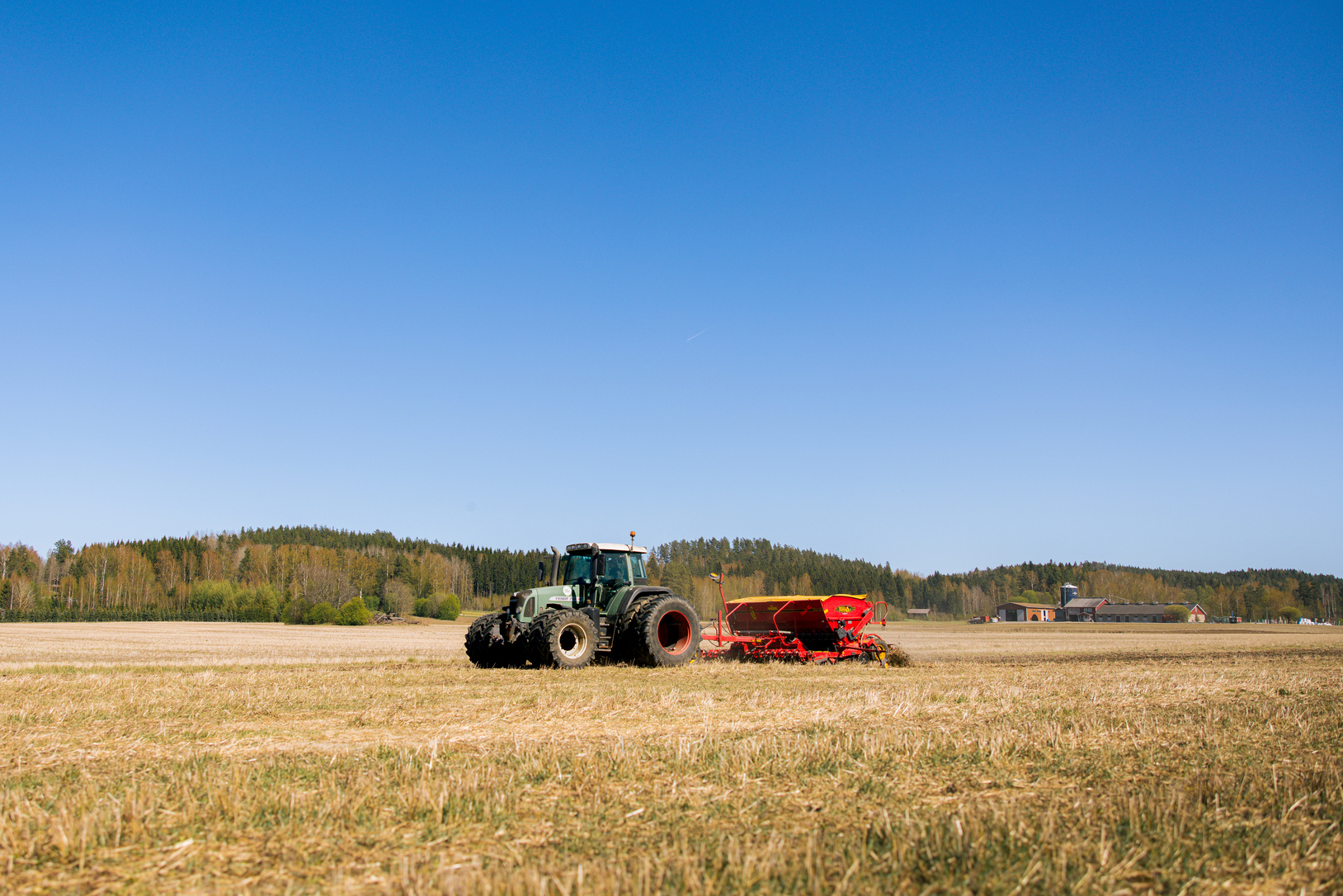
“Uudistaja brings structure to farming and clarity to decision-making.”
Tage Stam, farmer and co-developer of Uudistaja, Lassas farm
UUDISTAJA – A FARM DEVELOPMENT TOOL
BY FARMERS, FOR FARMERS
WHAT IS IT?
A practical tool to support the transition to and implementation of regenerative agriculture on the farm.
It helps you map out your current situation, set goals, track progress, review results, and define the next steps.
BENEFITS FOR FARMERS
Uudistaja helps strengthen farm management skills and practical know-how.
It supports you in planning and structuring your own solutions – and provides a clear framework for developing your farm in a goal-oriented and systematic way.
DEVELOPED BY FARMERS
Uudistaja has been developed in cooperation with farmers and experts, ensuring it meets the real needs of farmers working with regenerative agriculture.
WHY REGENERATIVE AGRICULTURE?
Better soil health
Improves soil health and farm profitability and strengthens yield resilience in changing weather conditions.
Less dependency on purchased inputs
Reduces reliance on external inputs.
More biodiversity
Boosts biodiversity and supports efforts to protect the Baltic Sea
Climate benefits
Helps mitigate climate change by storing carbon in the soil.
Uudistaja brings regenerative agriculture into everyday farming – systematically, holistically, and from the farmer’s perspective.
UUDISTAVAN VILJELYN SIIRTYMÄN TUEKSI
Q&A – FREQUENTLY ASKED QUESTIONS
What is the Carbon Action platform?
The Carbon Action platform is a collaboration led by BSAG, bringing together researchers, farmers, and companies to promote regenerative agriculture that helps mitigate climate change and biodiversity loss, while improving yield resilience and water quality. The Finnish Meteorological Institute coordinates the multidisciplinary research projects on the platform, all focused on increasing carbon sequestration in soils.
What is regenerative farming?
Regenerative farming is a farming method that, in connection with food production, aims to continuously and comprehensively improve soil health, water protection, and agricultural ecosystems.
BSAG uses the term regenerative farming to emphasise farm-level actions as a complement to the term regenerative agriculture, which refers to the entire agricultural system. The farm-level actions include increasing year-round plant cover, minimising soil tillage, diversifying crop rotations, and applying adaptive grazing.
These methods aim to store carbon in the fields, increase yields, and improve nutrient cycling. They also aim to improve soil health and aquatic ecosystems and increase biodiversity. Good water management and soil structure are the foundation of regenerative farming.
What is carbon farming?
Carbon farming is a farming method that, in connection with food production, aims to increase the long-term storage of carbon in the soil and reduce greenhouse gas emissions from arable land.
The concept emphasises the effects of farming practices on carbon sequestration. In practice, carbon sequestration has other benefits too, such as improving soil health and crop yields.
The long-term storage of carbon in the soil by plants is a complex process. Through assimilation, plants produce sugars that feed soil microbes. The microbial activity accumulates carbon compounds in the soil, which bind soil particles together to form soil aggregates. A good aggregate structure tells us that there is life in the soil. The carbon compounds that accumulate on the surfaces of soil particles and in the soil aggregates increase the soil’s carbon stock.
Another important point to note about carbon farming is that it must always be done according to soil type, with the aim of either increasing or maintaining soil carbon stocks. For example, in clay soils, it is often sensible to try to add carbon to increase soil tilth. In peat soils, it is not possible to add carbon, but it is better to try to reduce the amount of carbon escaping to the atmosphere.
NEWS

CARBON ACTION -KLUBI
The Carbon Action Klubi is a free and open network for Finnish farmers. It provides members with up-to-date information on regenerative agriculture methods, useful materials, and a wide range of events – from webinars to field days. As a member, you can connect with other farmers interested in regenerative agriculture.